
Your 21-Day First Step Protocol
Feed it by day. Load it in the morning. Hold it by night.
You're covered for 90 daysYou made a good call. Here's why, and here's exactly what happens next.
If you're like most people who order Fascena, you've already tried five or six things. Insoles. Stretches. Ice. Maybe a shot. So it's normal to open the box and think: "here we go again."
This time is different for one simple reason. Everything you tried before was aimed at the pain. This protocol is aimed at the band itself: the thick strip of tissue under your foot that's been wearing out.
You don't have to take our word for it. You're going to measure it. Every morning you'll write down two numbers, and they'll tell you whether it's working. Not us, not a review. Your own first step.
And you're covered. You have 90 days. If your numbers don't move, email us and you get your money back. So your only job now is to follow the plan.
Today
Log it right after your first few steps. It saves on this phone.
Why the first step hurts the most
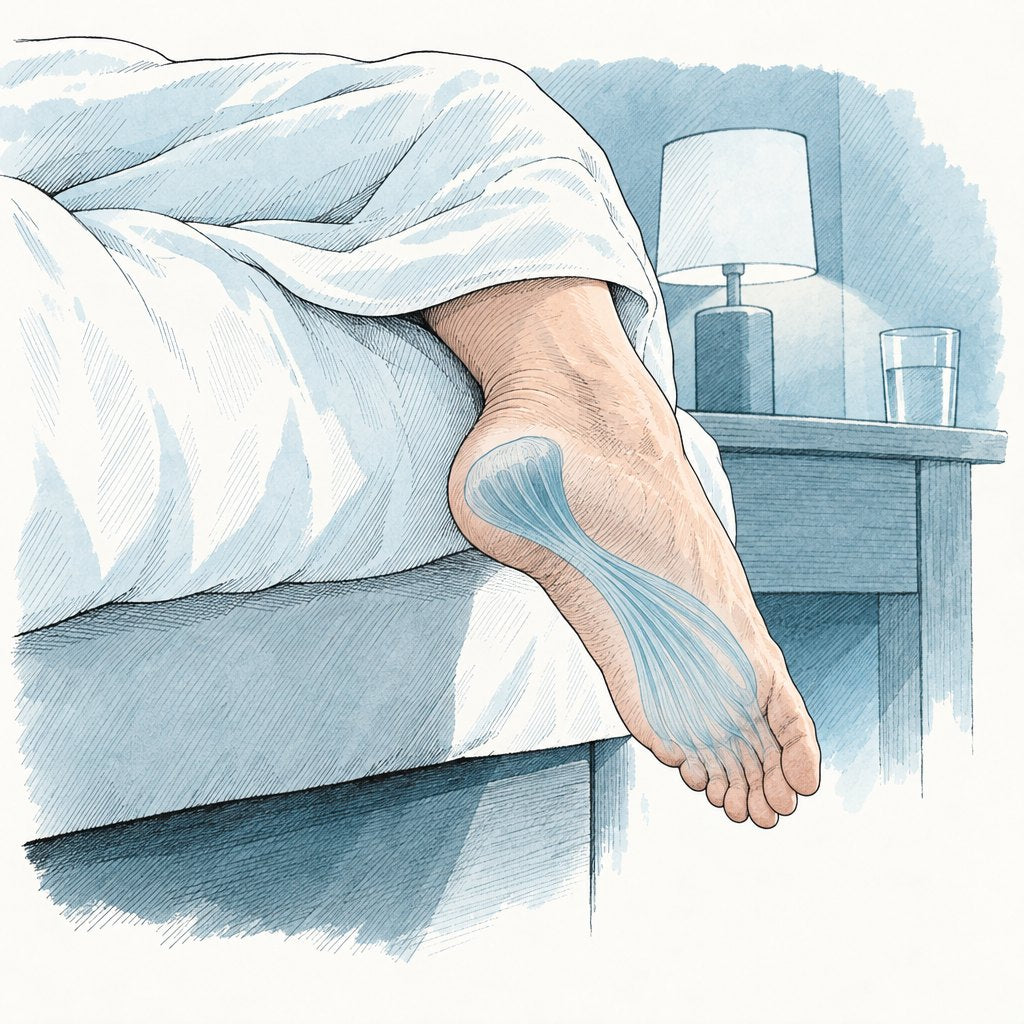
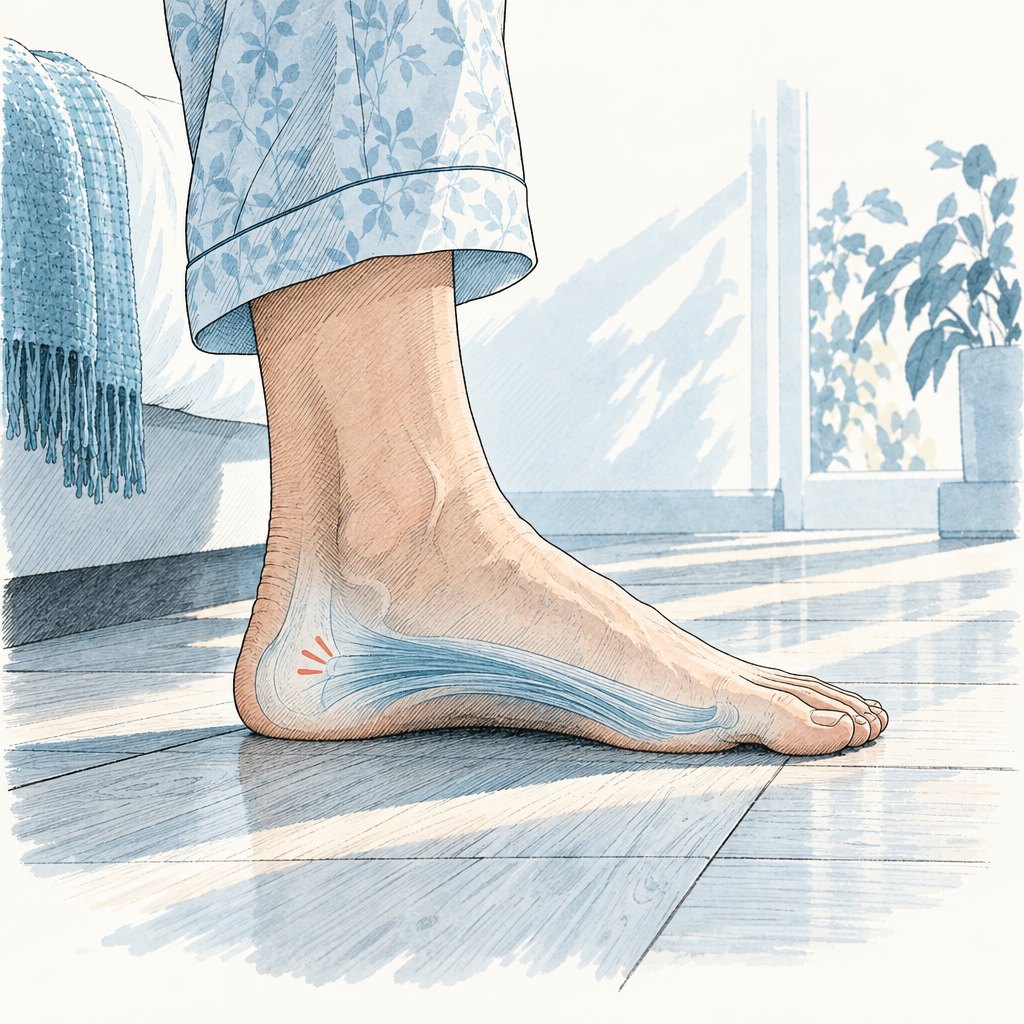
The band under your foot is called the plantar fascia. It runs from your heel to the base of your toes and holds up your arch, like the string on a bow. Every step pulls on it.
It's made almost entirely of one material: Type I collagen. Your body repairs it a little every day, but after about 25 that repair slows down. When the band wears faster than you rebuild it, the fibers fray. Heel pain that has lasted months looks less like inflammation under a microscope and more like a worn-out rope. That's why ice and pills only take the edge off. There isn't much fire left to put out.
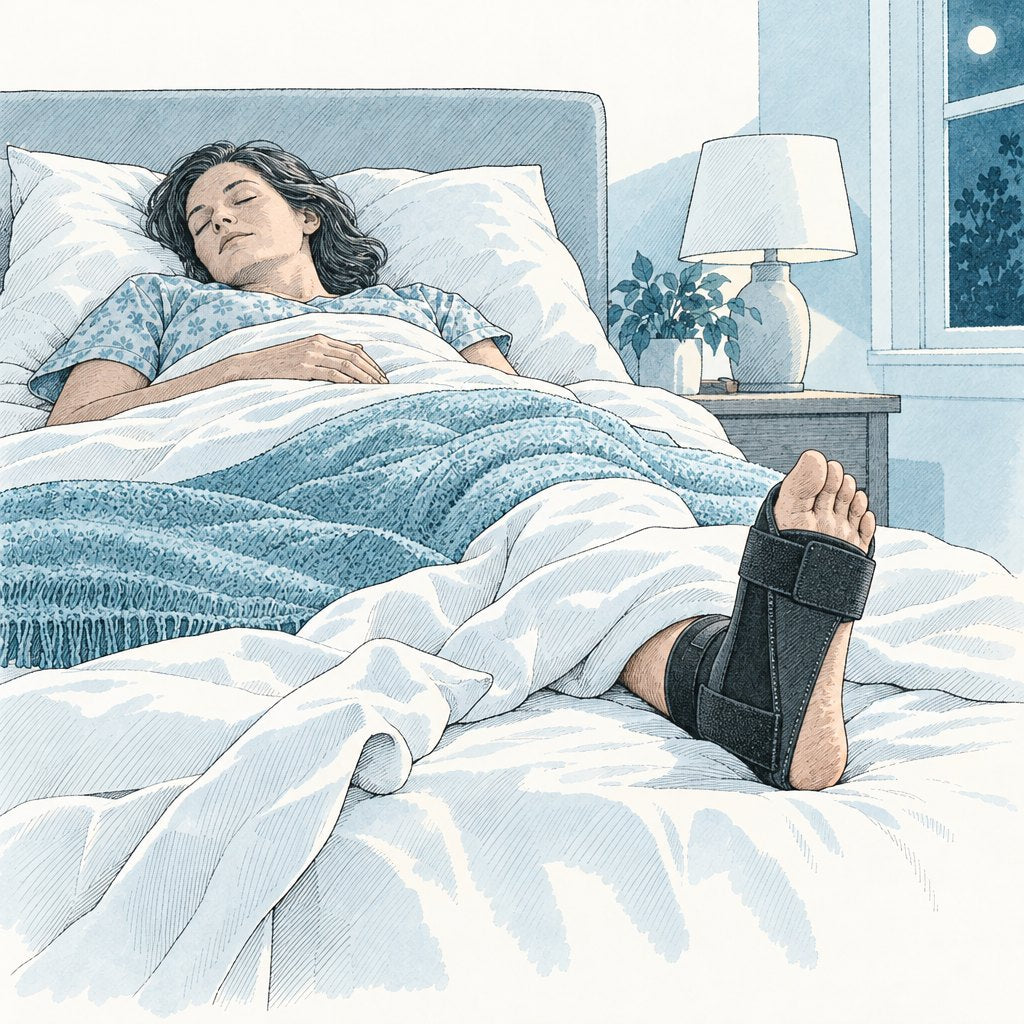
Here's the part nobody explains. While you sleep, your foot rests with the toes pointed down. The band relaxes and shortens, and your body does its repair work overnight. So it heals short.
Then you stand up. All your weight lands on a band that just spent eight hours shrinking, and it gets yanked tight in one second. That's the nail in your heel. That's why the first steps are the worst, why it eases once you "warm up", and why it comes back after a movie or a long drive.
Every night it heals short. Every morning you pull it open again. To break that loop you have to do three things at once.
The three jobs
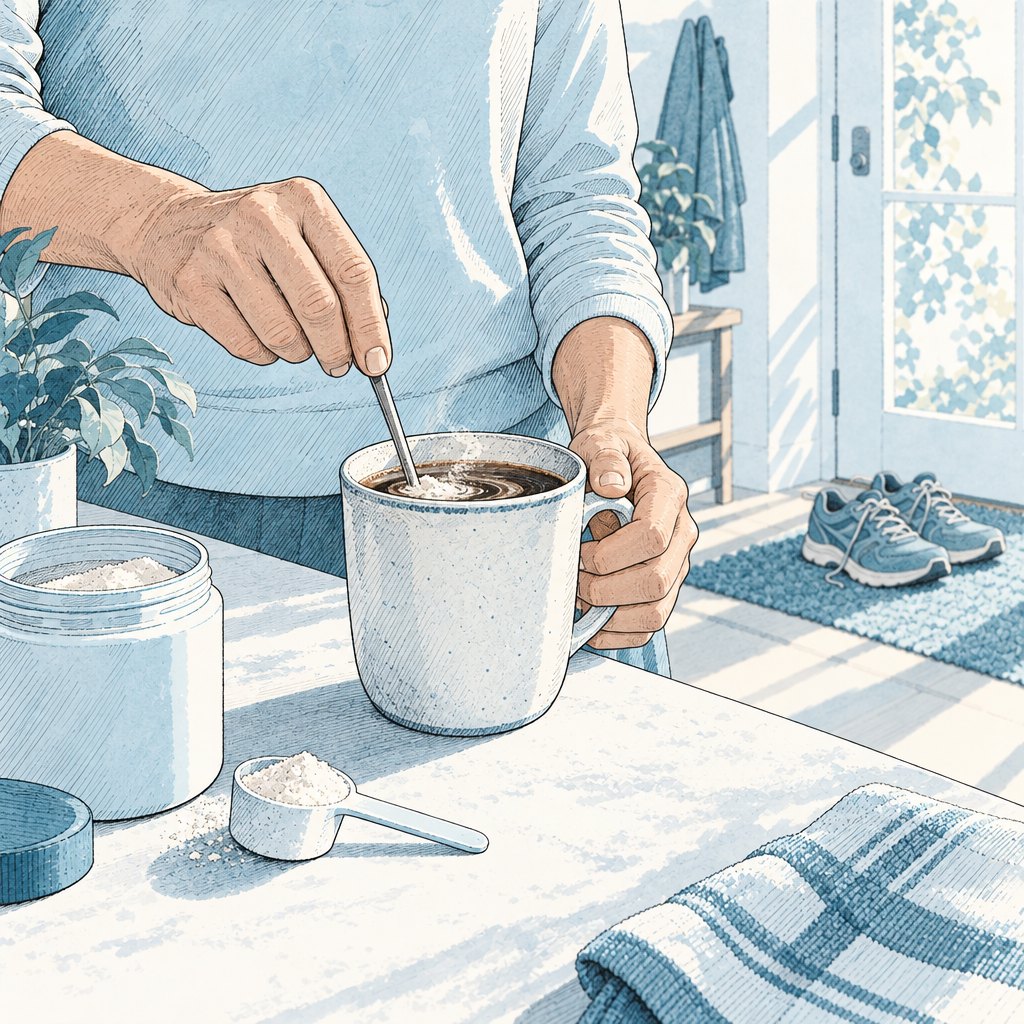
- Feed it (day). Give the band what it's made of: Type I collagen, plus vitamin C, which your body needs to build collagen at all. That's the scoop.
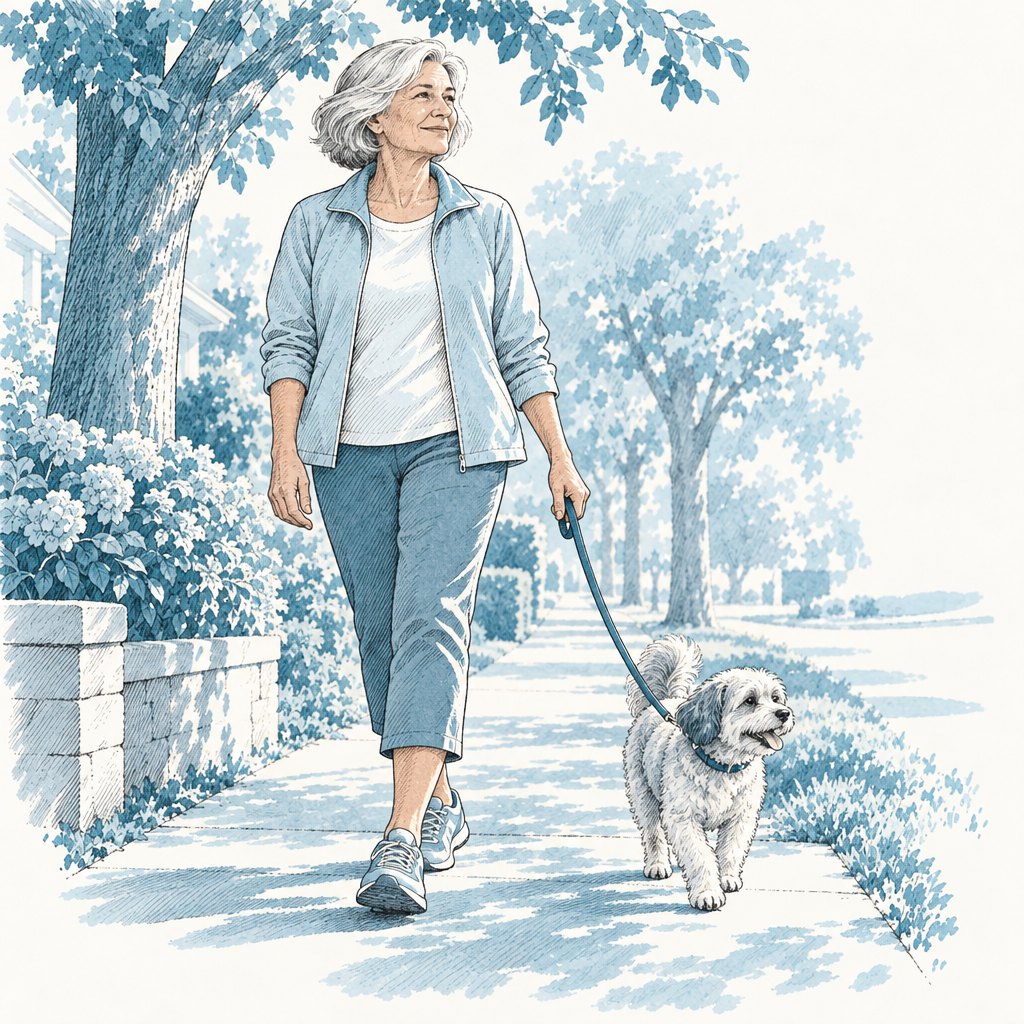
- Load it (morning). Tissue rebuilds where it gets used. A walk after the scoop tells your body where to send the materials. Later, slow heel raises make the band stronger.
- Hold it (night). Stop the band from healing short overnight, so the first step stops tearing it open.
Most people only ever do one of these, if any. This protocol does all three, every day, for 21 days.
Your two numbers: the whole test
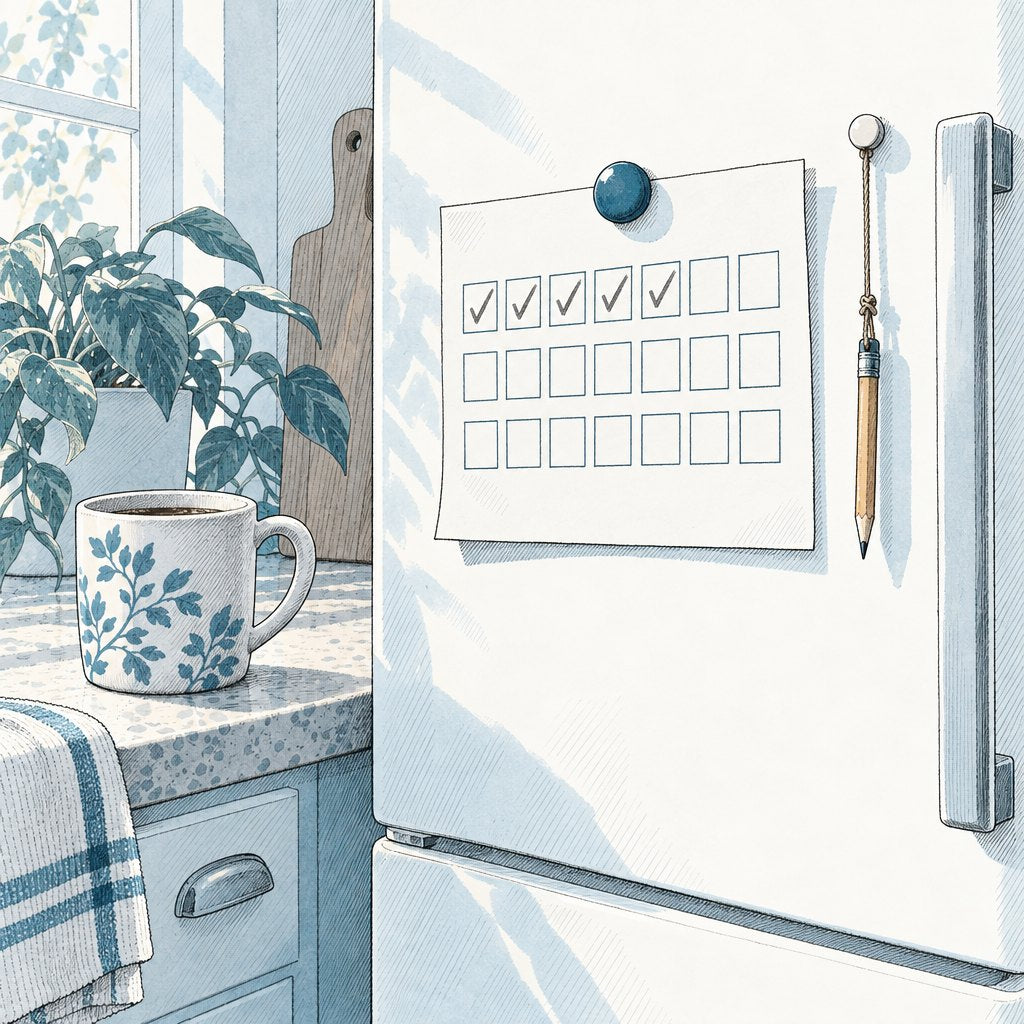
Every morning, right after your first few steps, write down:
- First Step Score: how bad was the first step, from 0 (nothing) to 10 (worst ever)?
- Warm-up Steps: roughly how many steps until your heel "let go" and walking felt normal? 5? 20? 50?
Why two numbers? Because the first thing to change usually isn't the pain itself. It's the warm-up. The hobble gets shorter before the first step gets softer. People who only watch the pain often miss the early signs and quit right before it turns. Track both.
The 2-minute bed routine
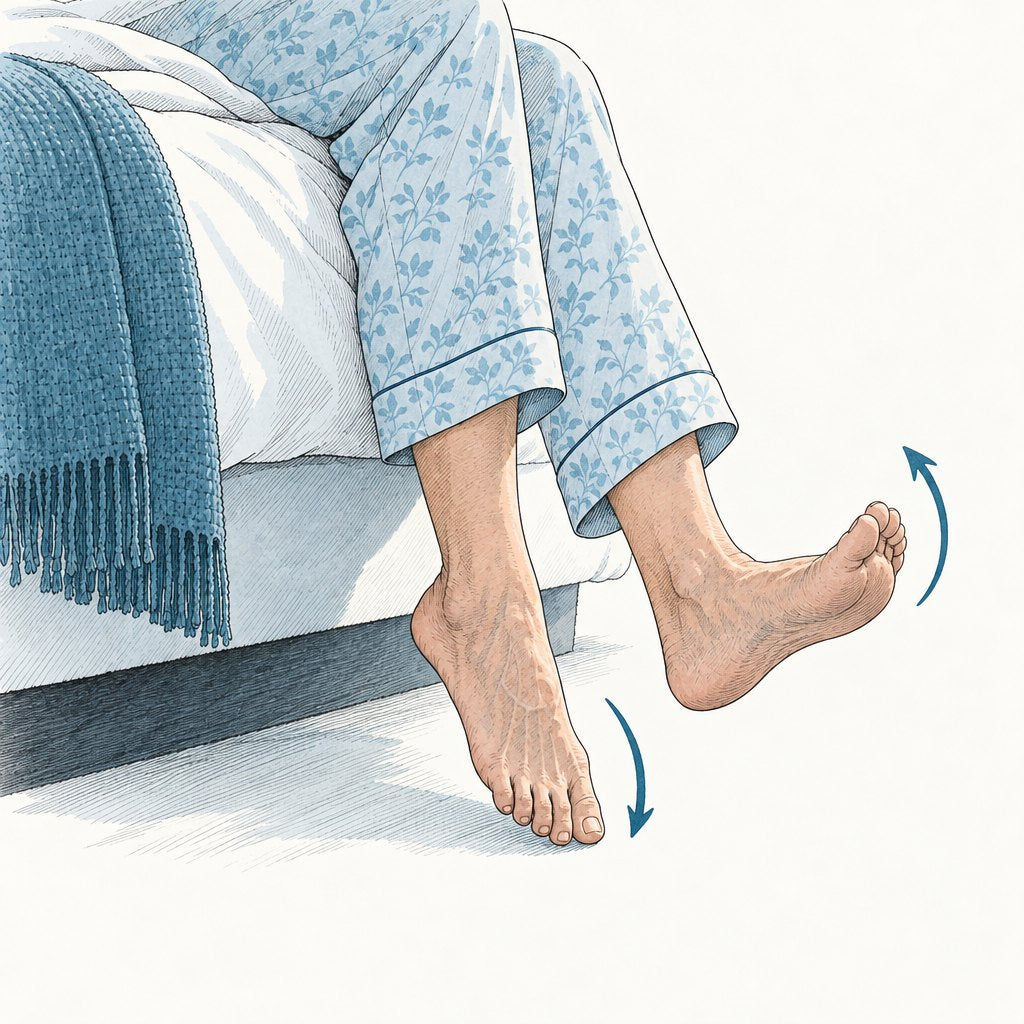
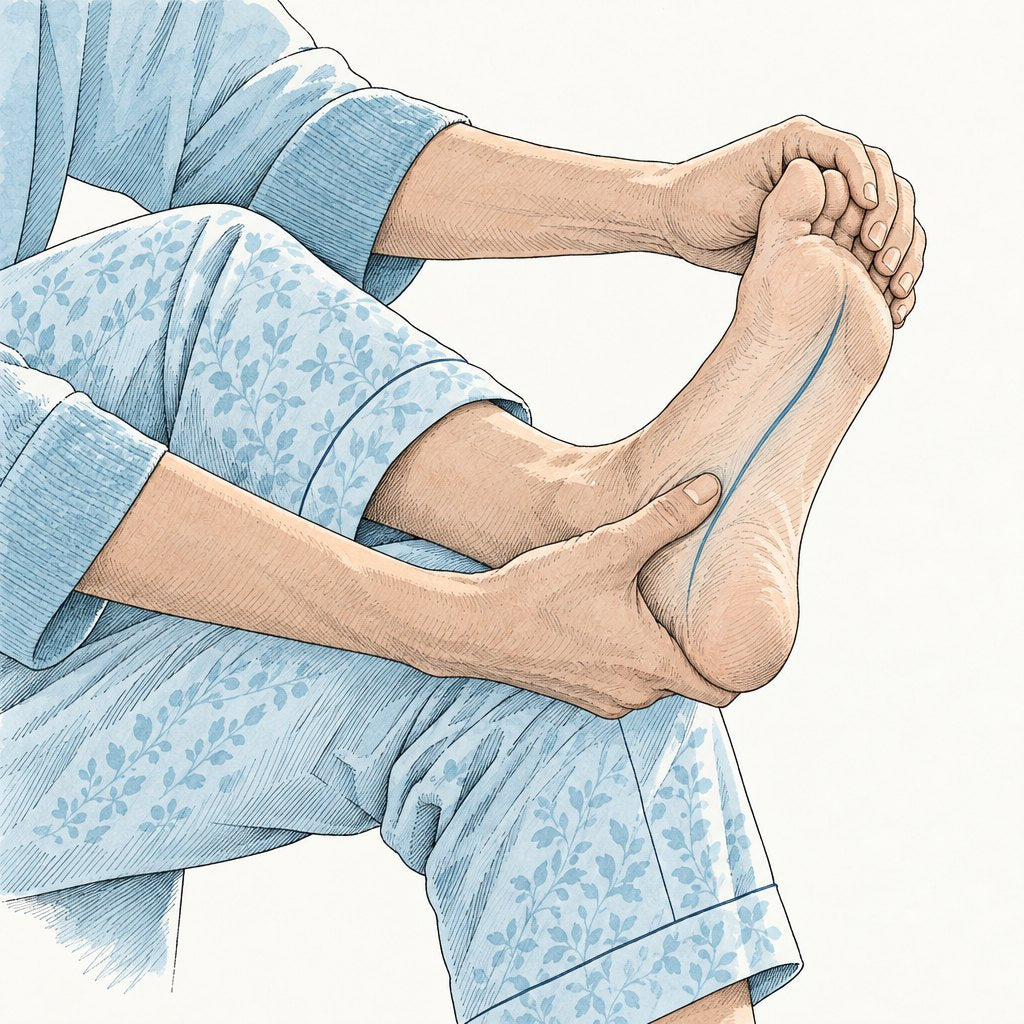
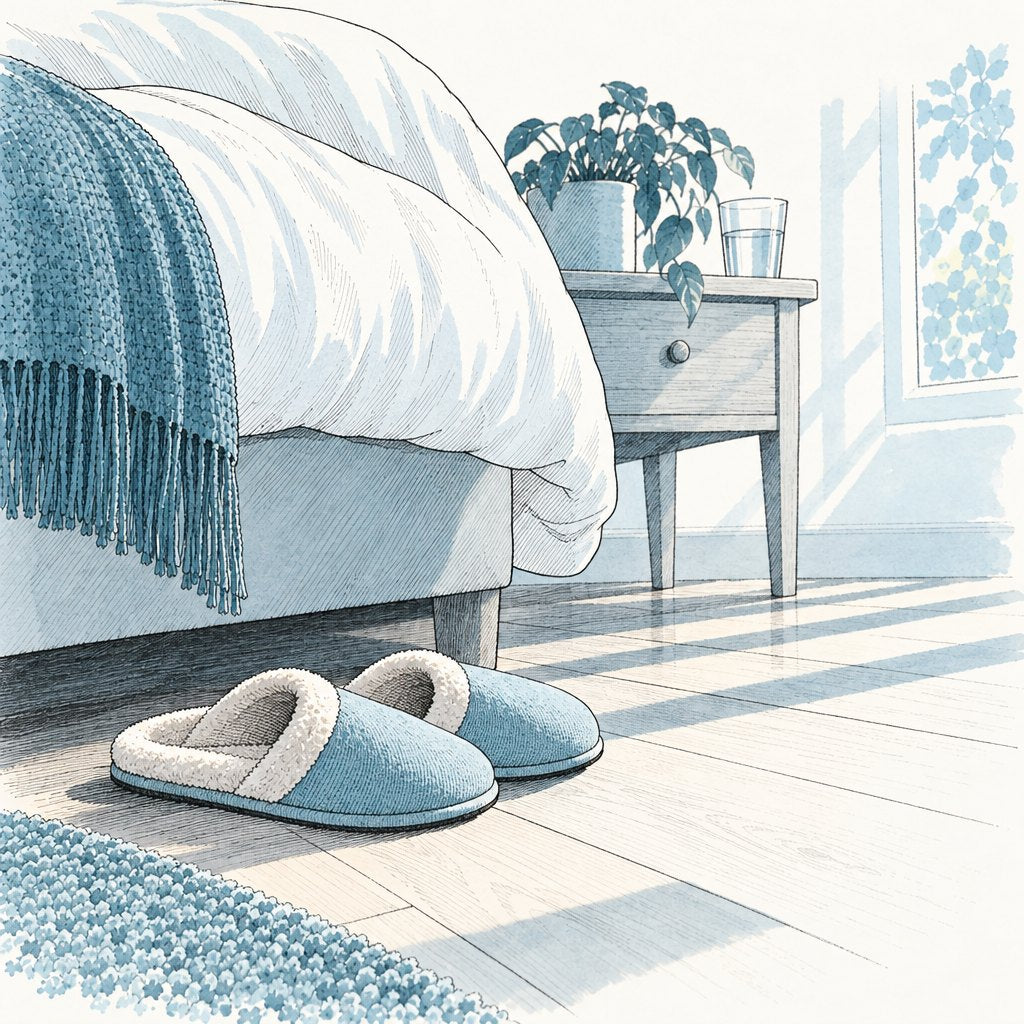
Sitting on the edge of the bed, before your feet take any weight:
- Ankle pumps, 30 seconds. Point your toes down, then pull them up toward your shin. 20 times, both feet.
- The band stretch, 1 minute per sore foot. Cross the sore foot over your other knee. Pull your toes back toward your shin until the band tightens under your arch. Put your other thumb on the arch: it should feel tight like a guitar string. Hold 10 seconds. 10 times.
- Stand with support. Slippers on first (keep them right at the edge of the bed). A hand on the bed or the wall for the first steps.
The band stretch is one of the best-tested moves for morning heel pain. In the studies, people did it before their first step and before standing up after sitting.
The scoop, then the walk
- One scoop of Fascena in coffee, tea, water or a smoothie. Hot coffee is fine: the collagen is already broken into small peptides, so heat doesn't hurt it.
- Same time every day. Keep the bag next to the coffee maker so you can't forget it.
- Walk for 10 minutes, about 30 to 60 minutes after the scoop. Easy pace, good shoes. Around the house or a store counts too.
Why the timing: in a study at UC Davis, people who took collagen with vitamin C about an hour before exercise had roughly twice the markers of new collagen being made. The materials are in your blood, and the walk sends them to the band.
Hold it overnight
- With the Night Sock: put it on at bedtime. It holds your foot gently flexed up so the band can't shorten overnight. Start with a few hours if it feels strange; most people get used to it within a few nights.
- Without one: a 1-minute calf stretch before bed (towel around the ball of the foot, pull gently).
- The sheet trick: untuck the sheets and blanket at the foot of the bed. A tucked-in blanket presses your toes down all night, which is exactly the position that shortens the band.
The 21 days
Days 1-7 Calm it
The full daily routine: bed routine, scoop, walk, night. No barefoot on hard floors, not even to the bathroom. Don't "test" it with a long hike or a big shopping day. Optional: roll your arch over the roller or a cold water bottle for 2 minutes in the evening. It feels good; don't overdo it.
What to expect: usually nothing you can feel yet. That's normal. Tissue is slow. Your only job this week is to do it and write the numbers down.
Days 8-14 Load it
Keep everything from week 1, and add heel raises every other day: hold the wall, rise onto both toes slowly. 3 seconds up, 2 seconds hold, 3 seconds down. 3 sets of 12.
Some discomfort is fine, up to about 3 out of 10, as long as the next morning's First Step Score isn't worse. Sharp pain means stop and stay on the easier version.
Watch for: the warm-up getting shorter. Fewer hobbling steps before your heel lets go. If things are moving, this is often where it shows first.
Days 15-21 Build it
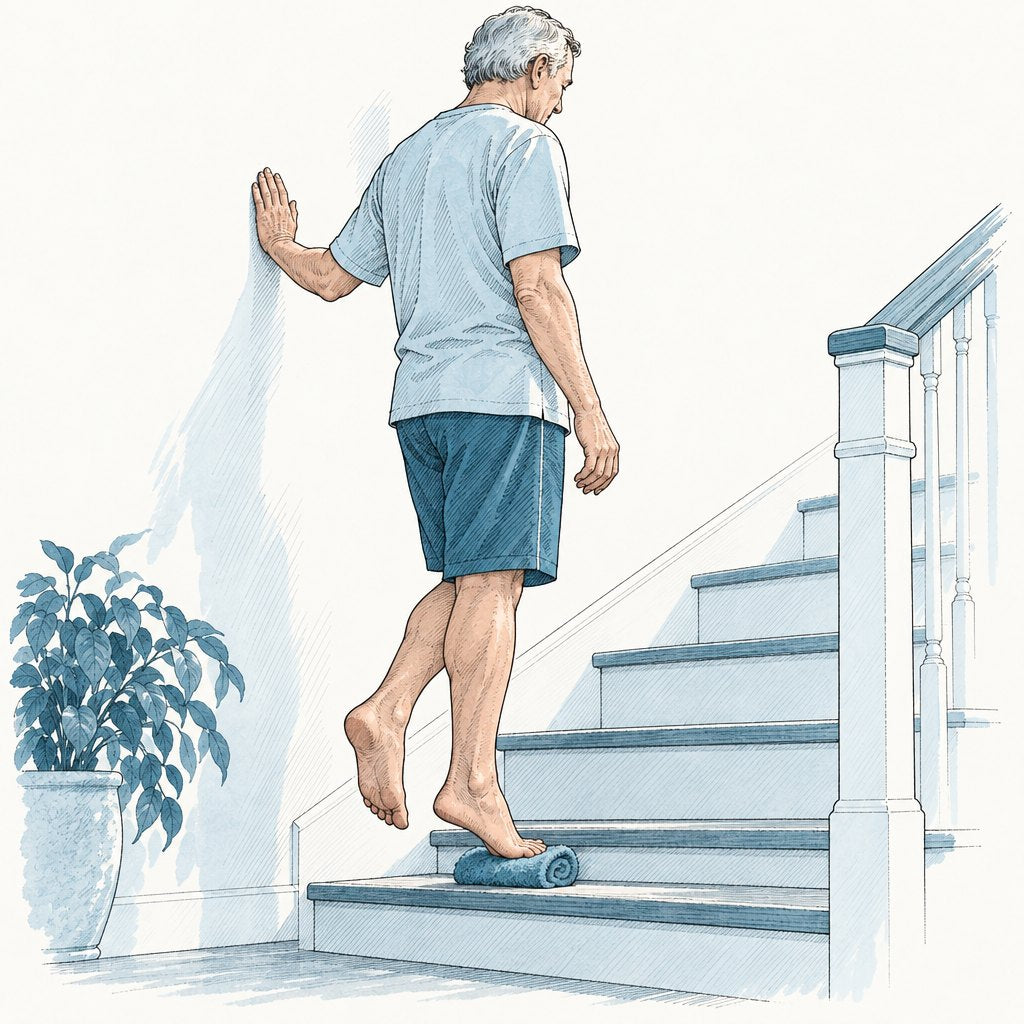
Switch to single-leg heel raises on the edge of a step, a rolled towel under your toes (it stretches the band while it works), the other foot lifted. Same tempo. 3 sets of 8 to 12, every other day. When 12 feels easy, wear a backpack with a few books. Make the walk 15 to 20 minutes if it feels fine.
Watch for: a lower First Step Score and walking that feels normal sooner in the day.
Day 21 Check your numbers
Put Day 1 next to Day 21. They moved? You're rebuilding. Keep going: connective tissue keeps remodeling for months, and the scoop keeps feeding it. We recommend keeping the routine for 2 to 3 months to lock it in. One bag lasts 30 days.
They didn't move? Check the bad-morning list below; usually one thing is quietly undoing the work. If you've done everything and nothing changed, email us. You're covered for 90 days.
The sitting rule, bad mornings and shoes
The sitting rule
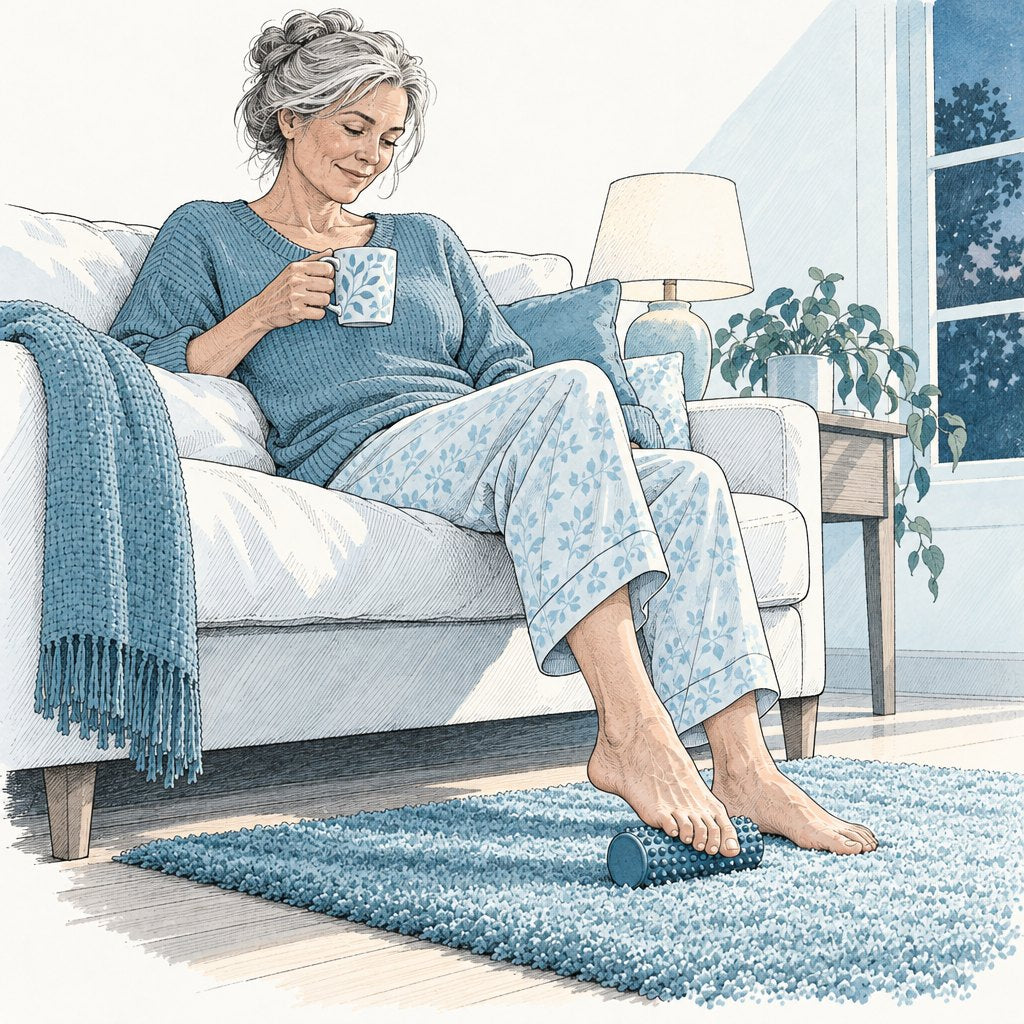
Whenever you've been sitting 30 minutes or more (car, couch, desk, movie), do 5 band stretches before you stand. The band shortens when you sit too. The "second first step" of the day is the one that sneaks up on people.
Bad morning? Read this before you panic
One bad morning doesn't mean it isn't working. Rebuilding is never a straight line. Look at yesterday:
- On your feet much longer than usual?
- Barefoot on a hard floor?
- New shoes, or very flat ones?
- Skipped the Night Sock or the bed routine?
- Heel raises above 3 out of 10?
Fix that one thing, go back to the easier version for two days, and keep going. Judge your numbers week by week, not day by day.
Shoes and everyday life
A firm heel and some arch support beat soft, flat shoes. Slippers with a back beat flip-flops. If you stand at work, a soft mat and a short sit-down each hour help. Keep slippers at the bed, the couch and the bathroom so you're never stuck barefoot.
See a doctor if
- Your heel or foot is red, hot or swollen, or you had a fall or injury.
- You have numbness, tingling or burning in your foot.
- The pain is bad at night while you're resting, or you have a fever.
- You have diabetes or circulation problems.
This protocol supports what your doctor tells you. It doesn't replace it.
You're covered for 90 days
Do the routine. Track your two numbers. If they don't move, email support@getrenua.com and you get your money back.
One bag lasts 30 days. Connective tissue keeps rebuilding for months, so don't stop when it starts working.
Get your next bagGeneral information to support the routine your doctor gives you. Not medical advice.